Zellige Tile Care and Maintenance: Cleaning and Sealing Guide
October 12, 2026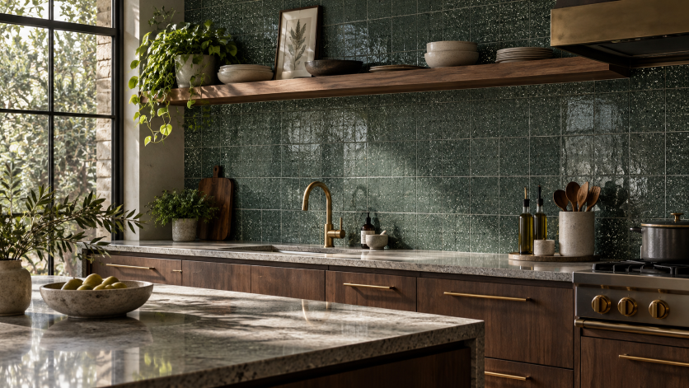
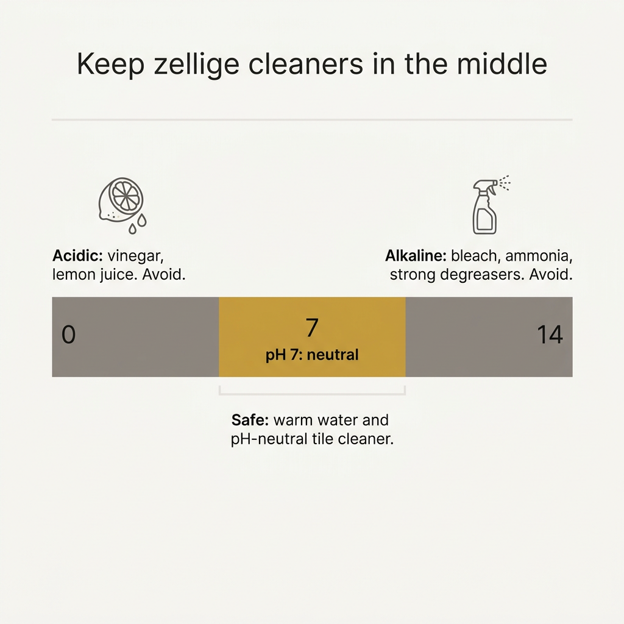
Caring for zellige tile comes down to a few habits. Wipe it with warm water or a pH-neutral tile cleaner and a soft cloth, then dry it. Keep vinegar, lemon juice, bleach, ammonia, and scouring pads away from it. In showers, backsplashes, and other wet areas, seal the tile and the grout, and reseal every one to two years or when water stops beading on the surface.
At Bedrosians Tile & Stone, we've worked with tile and stone for 78 years, and our Zagora glazed terracotta zellige is handmade by artisans in Morocco. The steps below follow the care guidance we publish for Zagora, and they apply to most glazed zellige.
Why zellige needs gentler care than regular ceramic tile
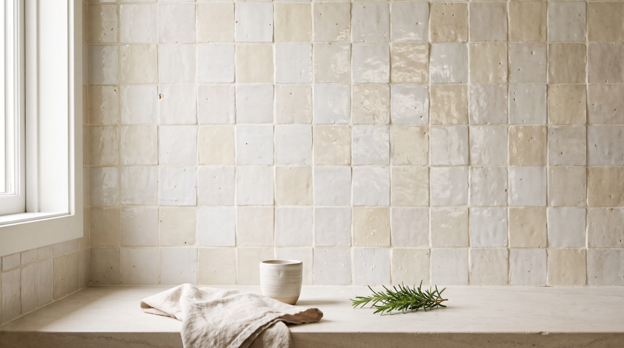
Zellige is glazed terracotta. Each tile is shaped from clay, dried in the sun, dipped in glaze by hand, fired in a kiln, and chiseled to size. Zellige is not sealed at the factory, and the clay under the glaze can absorb water and stains.
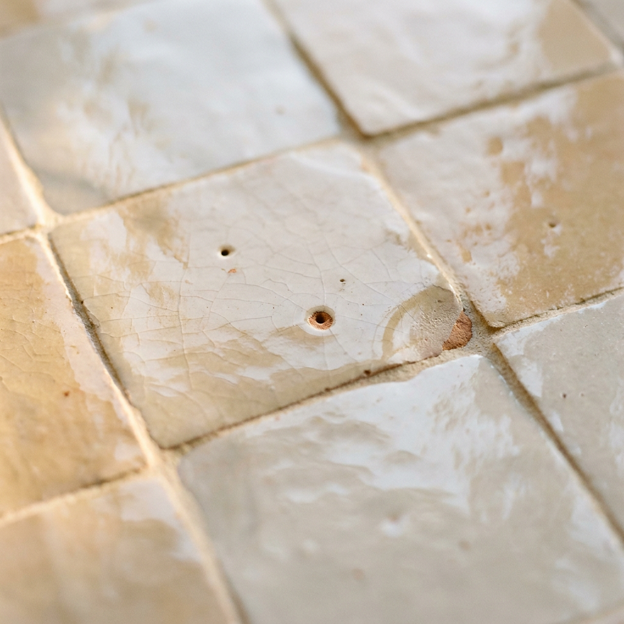
Handmade tile also has small openings in its surface. Crazing (fine hairline cracks in the glaze), small pits, and chipped edges are common on zellige. They are a normal result of the handmade process, and the tile is fine to use. They are also the places where water, grease, and harsh cleaners can reach the clay underneath. That is why the cleaner you choose and the sealer you use matter more on zellige than on factory-made ceramic tile.
If you're still deciding whether zellige is right for your project, our guide to what zellige tile is and why designers love it covers where it comes from and where it works best.
How to clean zellige tile day to day
Everyday cleaning takes a few minutes and only a few supplies. Here is the routine we recommend:
1. Remove dust and loose dirt first. Use a dry, soft cloth on walls, or sweep if your zellige is on a floor.
2. Wipe with warm water or a pH-neutral cleaner. A pH-neutral cleaner is neither acidic nor alkaline, the same as plain water. It is the gentlest choice for both the glaze and the grout.
3. Rinse off any cleaner. Soap left behind forms a sticky film, and that film attracts dirt, especially in the grout lines.
4. Dry the tile with a clean towel. Water left to dry on the surface can leave mineral spots on the glaze. A quick towel dry keeps the tile clear.
5. Clean up spills soon. Sauce, oil, and soap are easier to remove before they have time to dry or soak in.
Cleaning a zellige kitchen backsplash
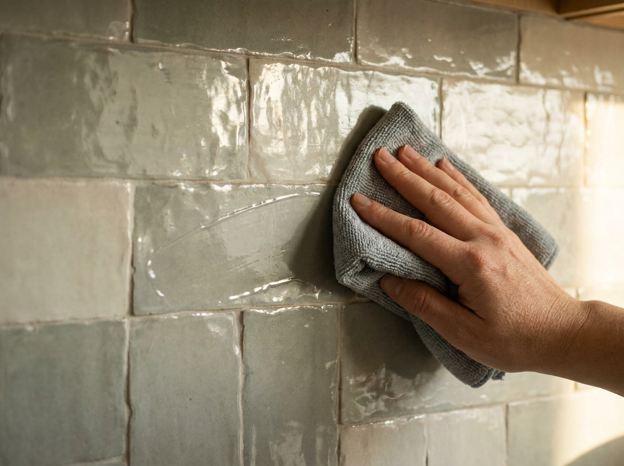
A backsplash behind a range picks up grease. Wipe it with a pH-neutral cleaner and rinse your cloth often, so you aren't moving grease from one tile to the next. Then dry it. For the rest of the room, our kitchen tile cleaning tips cover counters, floors, and grout.
Cleaning a zellige shower
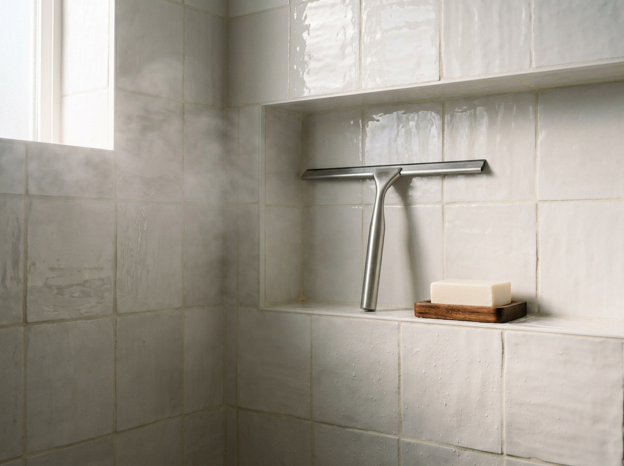
In a shower, the main buildup is soap film and water spots. Running a squeegee over the walls after each shower helps, and so does running the bathroom fan. Both keep the tile and grout dry for more of the day.
What not to use on zellige tile
Many common household cleaners are too harsh for handmade tile. Keep these away from your zellige:
Avoid | Why |
Vinegar, lemon juice, and other acidic cleaners | Acid can etch and dull the glaze over time. It also dissolves the cement in grout, even grout that has been sealed. |
Bleach | It can etch and dull the glaze, and it breaks down sealer. |
Ammonia | It can etch and dull the glaze, and it breaks down sealer. |
Strong alkaline degreasers | They can damage tile and grout and wear down sealer. |
Steel wool, scouring pads, and abrasive powders | They can damage the glazed surface. |
Oil-based or wax-based cleaners | They leave a film in the grout that attracts dirt. |
Vinegar is a popular natural cleaner, so the warning surprises a lot of people. Grout is made mostly of cement, and cement breaks down when it meets an acid. The Tile Council of North America's consumer site explains that vinegar can dissolve the cement in grout, even when the grout is sealed. If you aren't sure about a product, test it first on a spare tile or a spot no one will see.
Do you need to seal zellige tile?
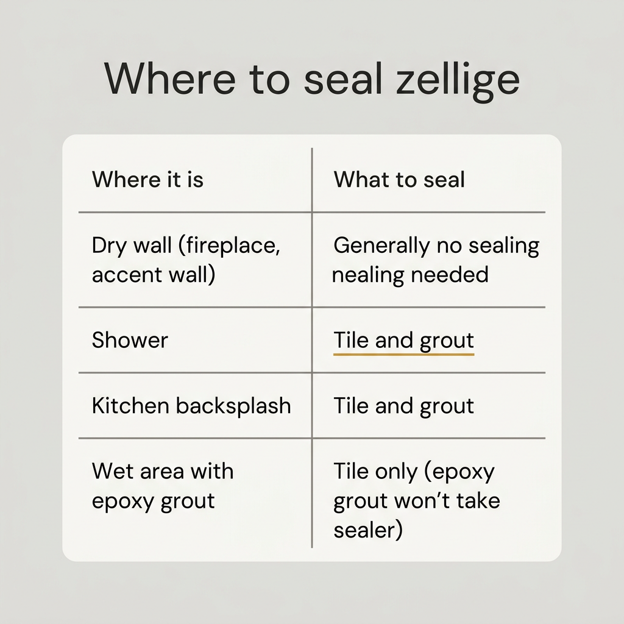
It depends on where the tile is. Glazed zellige on a dry wall, like a fireplace surround or a living room accent wall, generally doesn't need sealing. In showers, backsplashes, and other places that get wet, seal both the tile and the grout after the grout has cured.
For our Zagora zellige, we recommend sealing the tile along with the grout, because sealing helps preserve the tile's color and richness.
Use a penetrating sealer. A penetrating sealer soaks into the clay and the grout and doesn't coat the surface. A topical sealer sits on top as a coating, and according to the Tile Council of North America, topical sealers can give grout a plastic look and wear off over time.
Sealing depends on your grout
The kind of grout your installer used changes what you seal. Cement-based grout is porous and soaks up stains, so sealing it is a good idea. Epoxy grout absorbs almost nothing and won't accept a sealer. If your zellige has epoxy grout, there's no need to seal the grout.
How often should you reseal zellige?
In wet areas, plan to reseal zellige tile and grout every one to two years. A shower or the backsplash right behind a range usually needs it sooner than a backsplash that rarely gets splashed.
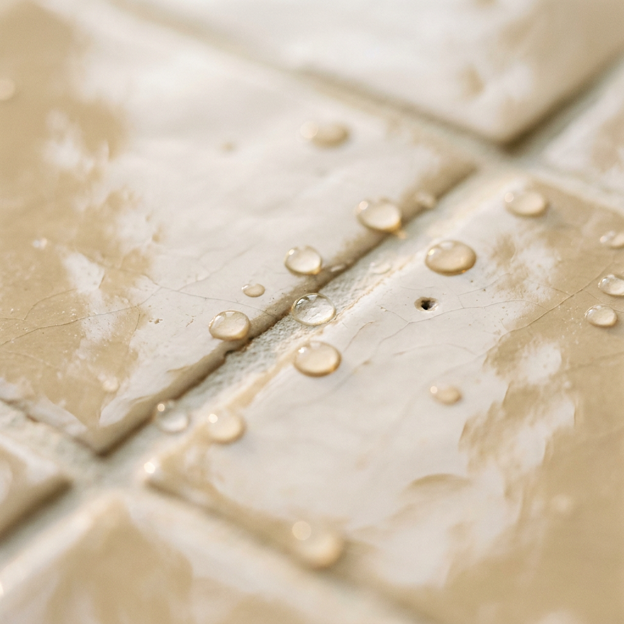
The easiest way to check is a water test. Put a few drops of water on the grout and on a tile. If the water beads up, the seal is still working. If the water darkens the grout or soaks into the tile, it's time to reseal.
You should also reseal any area you've deep cleaned with a heavy-duty cleaner. Strong cleaners can strip sealer, even when they don't hurt the tile.
How to reseal zellige tile
You can reseal zellige yourself with a penetrating sealer. Follow the directions on your sealer's label, since products differ. The general steps look like this:
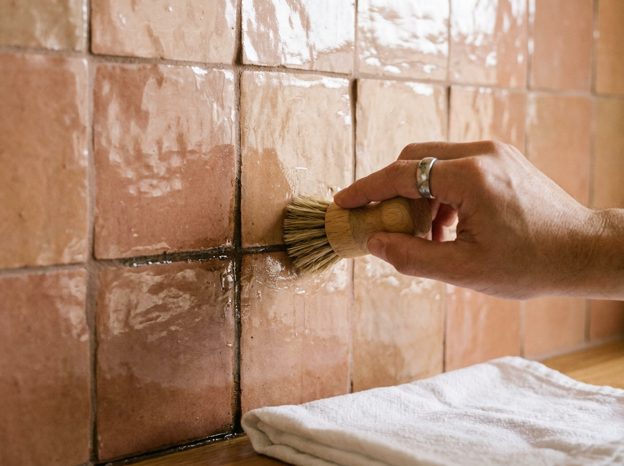
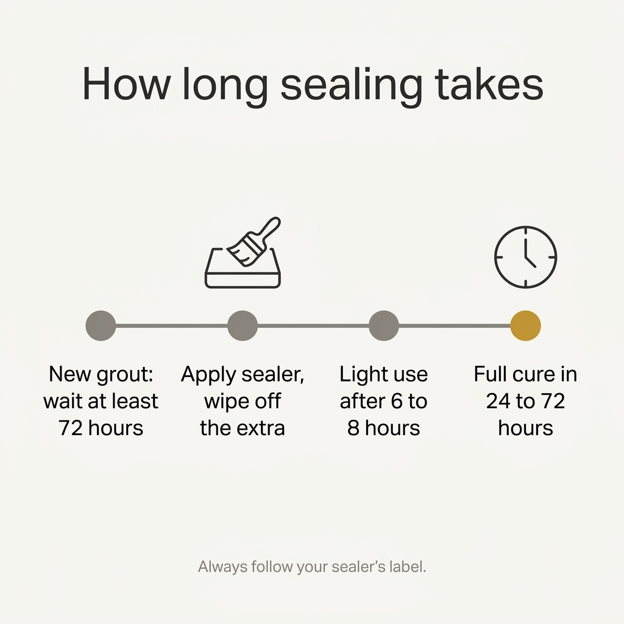
1. Clean the tile and grout with a pH-neutral cleaner, then let everything dry completely. If the grout is brand new, wait at least 72 hours before sealing.
2. Test the sealer on a small hidden spot and let it cure for 24 hours, so you can check that you like how it looks.
3. Apply an even coat of penetrating sealer with a paint pad, brush, or roller. Let it soak in for as long as the label says.
4. Wipe off the extra sealer with a clean, dry towel before it dries on the surface. Sealer left to dry on top can leave a residue.
5. Add a second coat if the label calls for it. Porous tile sometimes needs one.
6. Let it cure. Many penetrating sealers allow light use after six to eight hours and fully cure in 24 to 72 hours.
How to remove stains and buildup from zellige
Most spots come off with a pH-neutral cleaner and a soft cloth, so try that first. Move to a stronger, tile-specific product only if the spot is still there.
Grease and oil stains
Wipe grease off a backsplash as soon as you can. For an oil stain that has soaked in, use an oil stain remover made for tile and stone, and follow its directions.
Soap film and water spots
Use a soap scum remover made for tile, then rinse and dry the area. Drying the walls after showers keeps the film from building back up.
Stains and mildew in the grout
Scrub the grout with a nylon brush and a tile-safe cleaner. For mildew, use a mold and mildew remover labeled for tile and grout. If mildew keeps coming back, the grout sealer may have worn off and water may be getting into the grout.
Skip acid-based grout cleaners. They work by dissolving the top layer of the grout, and grout manufacturers don't recommend them because they can leave you needing to regrout.
After any heavy-duty cleaning, reseal the area you cleaned. Our installation, maintenance, and care page has more detail on cleaning and sealing by tile type.
Chips, crazing, and pits: what's normal
Crazing, small pits, chipped edges, and slightly uneven surfaces come with handmade zellige. Our Zagora care guide describes them as natural characteristics of the tile, so you don't need to repair them. Over the years, a small new chip tends to blend in with the rest of the wall.
If an edge feels sharp after installation, a tile rubbing stone can soften it.
If a tile ever breaks and needs to be replaced, it helps to have spares on hand. Each batch of zellige varies in color, so keep a few extra tiles from your original order. Have an installer who is experienced with zellige or other handmade tile swap in the new piece.
Zellige tile care FAQ
Can you use vinegar on zellige tile?
No. Vinegar is an acid. It can etch and dull zellige glaze over time, and it dissolves the cement in grout.
Is zellige tile hard to keep clean?
No. Day to day, zellige needs warm water or a pH-neutral cleaner, a soft cloth, and a quick dry. The one extra step is resealing wet areas every one to two years.
Does sealing change how zellige looks?
A penetrating sealer soaks in instead of coating the surface, so it keeps the tile's natural look. Some sealers are made to enhance or deepen color, so test yours on a hidden spot first.
How do you clean the grout between zellige tiles?
Scrub it with a nylon brush and a pH-neutral cleaner, rinse, and dry. If the grout is cement-based, keep it sealed so stains don't soak into it.
Get help caring for your zellige
If you have questions about caring for your Zagora zellige, or you're choosing a sealer for a new shower or backsplash, we're happy to help. Our showroom pro counters carry tile sealers and cleaners, including products from Miracle Sealants and Drytreat. Call (559) 275-5000 to be connected with the right showroom, or browse our zellige tile collection for your next project.

